Cheap Games, Expensive Lessons: How Budget Titles Are Schooling Players Before the Big Leagues

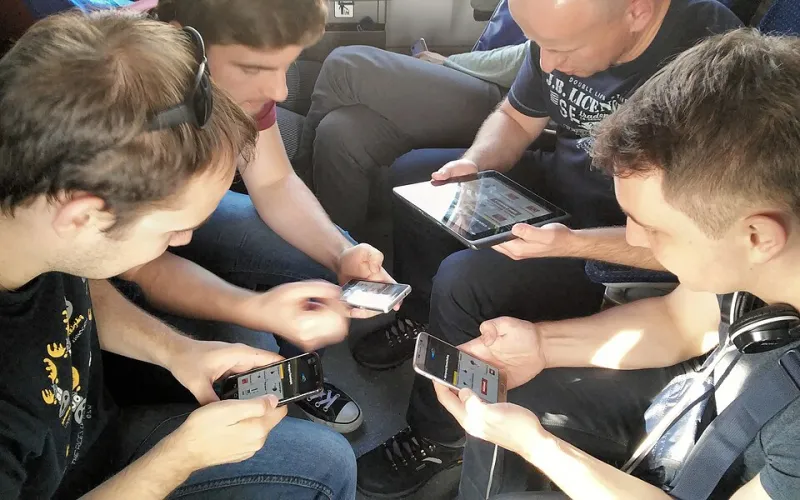
Photo: Joel McDonald (Polyculture), CC BY-SA 3.0, via Wikimedia Commons
Here's a scenario you've probably lived through. You drop sixty bucks on the latest AAA blockbuster, boot it up on launch night, and within the first hour you're already clicking through mechanics like you've done this before. Dodging enemy telegraphs. Parsing inventory systems. Reading boss patterns without even thinking about it. And somewhere in the back of your brain, a tiny voice whispers: wait, I learned this from that weird little dungeon crawler I bought on sale for four-ninety-nine.
That voice is onto something.
Budget games — the scrappy, sometimes janky, often brilliant titles that live in the $3-to-$15 range — have quietly become one of gaming's most underrated training grounds. Not because anyone planned it that way, but because low-stakes experimentation has a funny way of building real skills.
The No-Pressure Classroom
There's a psychological reason why cheap games teach so effectively, and it comes down to one word: stakes. When you spend sixty dollars on a game, there's a low-key anxiety attached to every decision. You want to play it "right." You follow guides, you avoid mistakes, you optimize. But drop five bucks on an indie roguelike you found on a Reddit thread? Suddenly you're just messing around.
And messing around is where learning actually happens.
Players who experiment freely in low-cost titles end up internalizing mechanics at a deeper level than those who follow walkthroughs in premium releases. They die repeatedly in a cheap platformer and figure out enemy timing through pure trial and error. They get completely destroyed by a budget strategy game and start actually reading tooltips. They finish a short indie narrative game and realize they've developed a taste for environmental storytelling — which completely changes how they engage with the world-building in the next Bethesda open-world drop.
The learning is real. It just looks like goofing off.
Mechanics That Migrate
Talk to enough gamers and a pattern emerges. Skills developed in smaller games don't stay in those games — they travel.
Take the explosion of movement-based indie titles over the last several years. Games like Celeste and Neon White built massive audiences by teaching players to be precise, intentional, and patient with their inputs. Players who put serious time into those titles brought a completely different movement vocabulary into games like Sekiro or even competitive shooters. The muscle memory transferred.
The same thing happens with resource management. Players who grind through cheap survival crafting games — the kind that run on a potato laptop and look like they were made in a weekend — often show up to big-budget survival titles with an almost unfair intuition for pacing their progression. They already know how to resist the urge to blow all their materials at once. They've been burned enough times in low-stakes environments that the lesson stuck.
Developers at indie studios will tell you this is partly intentional, even if it's not framed that way. When you're building a game with a tiny team and a microscopic budget, you can't hide bad design behind cinematic cutscenes or sheer graphical spectacle. The mechanics have to carry the experience. That pressure forces clarity — and clarity is exactly what teaches players.
What AAA Can Learn From the $5 Shelf
Here's where it gets interesting. The influence isn't just flowing from cheap games to players. It's flowing from cheap games to the studios writing the big checks.
Look at the way mainstream gaming has shifted over the past decade. Roguelike elements — procedural generation, permadeath, run-based progression — went from being a niche indie staple to a core feature in titles with nine-figure development budgets. That didn't happen because some executive had a vision. It happened because players who'd been grinding Binding of Isaac and Dead Cells showed up to mainstream gaming and demanded more of the same energy. The market followed the players, and the players had been trained by the indie scene.
The same story plays out with accessibility options, compact game design, and mechanical transparency — all things indie developers pioneered out of necessity that are now standard expectations in AAA releases. Players who learned what they liked in the budget tier showed up to expensive games with sharper opinions and higher standards. Studios that ignored those signals paid for it in review scores.
The Accidental Curriculum
Nobody at a small indie studio sits down and says, "let's make a game that prepares players for Call of Duty." The curriculum is accidental, emergent, and completely genuine — which might be exactly why it works.
When a game is built without a massive marketing budget propping it up, the design has to earn attention through feel. Through the satisfaction of a mechanic clicking into place. Through the moment a player finally cracks a puzzle they've been stuck on for twenty minutes and feels like an absolute genius. Those moments build pattern recognition, problem-solving reflexes, and most importantly, confidence.
Confidence is massively underrated in gaming. A player who has failed and recovered in a dozen low-cost games approaches a brutal AAA boss fight with a completely different mindset than someone who's only ever played guided, hand-held experiences. They know how to lose. They know how to adapt. They know that the answer is somewhere in the system, and they're patient enough to find it.
The Million Ways Philosophy in Practice
At 1Mil Games, the whole idea is that there are a million ways to play — and every single one of them counts. The $5 impulse buy on a Tuesday night. The free-to-play mobile puzzler you knocked through on a long flight. The weird little narrative game a friend linked you in Discord that you finished in one sitting.
None of those experiences are lesser. In a lot of cases, they're building something in you that the sixty-dollar blockbusters get to benefit from later.
So next time you're scrolling through a Steam sale, eyeing some bizarre-looking indie with a hand-drawn art style and a price tag that's basically the cost of a gas station coffee — buy it. Play it badly. Die a lot. Experiment like nobody's watching.
You might just be investing in your own gaming education. And honestly? That's a better deal than most full-price releases can offer.
The Takeaway
Budget games aren't a consolation prize for players who can't afford the real thing. They're a laboratory. A training facility. A place where the stakes are low enough that real learning can happen — and where the lessons are sharp enough to carry you straight into the deep end of premium gaming.
The $5 game didn't just entertain you. It made you better. And somewhere in a big, expensive studio, a designer is staring at player feedback wondering why their audience suddenly has such high standards.
The indie scene sent them. And they've been studying.