From Solo Runs to Stadium Crowds: The Unexpected Way Indie Games Are Building Esports' Next Stars
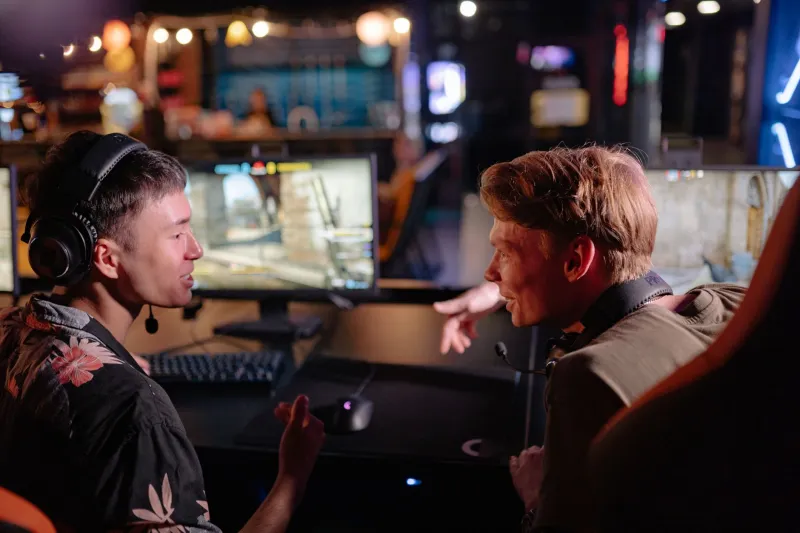
Nobody handed Marcus Teel a scouting report. Nobody enrolled him in an esports academy or put him through structured drills. What they did give him — well, what he gave himself — was about 600 hours inside a punishing indie platformer that most people bounce off in the first 20 minutes.
Now 22 and competing in regional fighting game circuits across the Midwest, Marcus traces his reaction time, his composure under pressure, and his obsessive ability to analyze failure back to one thing: grinding leaderboard runs in games most of his competitors have never heard of.
"I learned how to lose," he says. "Like, really lose. Die on the same screen 200 times and still come back. That's not something you can fake in a tournament."
He's not alone. Across the US, a quiet and completely unplanned pipeline is forming between the solo indie game scene and competitive gaming's bigger stages — and the people building it mostly had no idea that's what they were doing.
The Training Ground Nobody Designed
Here's the thing about a well-made indie game with a leaderboard: it doesn't care about your feelings. It doesn't matchmake you against opponents at your skill level. It doesn't ease the difficulty curve when you've died 47 times. It just runs the clock, logs your time, and posts it next to someone who's 12 seconds faster than you.
That brutal feedback loop — instant, quantifiable, unapologetic — turns out to be one of the most effective skill-building environments in gaming. And indie devs, often without intending to, have been engineering it for years.
Jordan Fisk, an indie developer based out of Austin who shipped a precision platformer in 2022, started noticing something weird in his Discord server about eight months after launch. Players who had spent hundreds of hours optimizing their runs were showing up in comments talking about how the game had changed how they approached other competitive titles.
"One player told me he went from mid-ranked in a competitive shooter to top 5% in his region," Jordan says. "He said the movement optimization he did in my game rewired how he thinks about positioning. I built a chill platformer. I did not build an esports training tool. But apparently I did?"
Why Roguelikes and Platformers Hit Different
Not every indie game produces this effect. Walking simulators and cozy farming games are wonderful, but they're not exactly forging the next generation of clutch performers. The genres doing the heavy lifting here tend to share a few specific traits.
Roguelikes force adaptive thinking. Every run is different, which means players can't just memorize patterns — they have to read situations in real time and make fast decisions with incomplete information. Sound familiar? That's literally the core skill requirement of almost every competitive game on the planet.
Precision platformers — the Celeste-inspired ones, the ones where a single mistimed jump ends your run — build something rarer: the ability to stay mentally sharp after repeated failure. The psychology of competitive gaming is littered with talented players who crumble under pressure. The kid who's died on the same platform 300 times and kept going? They've already done the mental reps.
Then there are the leaderboards themselves. Public, persistent, and merciless. They create a competitive context without requiring a single opponent in the room. You're racing ghosts, racing numbers, racing your own previous best — and that self-directed competition builds an internal drive that coaches genuinely struggle to teach.
The Decentralized Draft
Traditional esports development runs through a pretty defined structure: play a popular title, get noticed online, maybe get picked up by an organization or a collegiate program. It's increasingly formalized, which is great for the top 0.1% and mostly irrelevant for everyone else.
What's happening in the indie space is messier, weirder, and arguably more interesting. There's no draft. There's no scouting. There's just a massive, distributed network of players getting genuinely good at genuinely hard games, and some percentage of them eventually crossing over into competitive scenes with a skill set that looks almost professionally developed.
Community manager and amateur esports organizer Priya Okonkwo, who runs a regional gaming series out of Chicago, has started paying attention to players' indie game backgrounds when she sees unusual talent pop up.
"I had a player come into our tournament circuit who had never played our featured game competitively," she says. "First event, top four finish. When I talked to her after, she'd spent two years optimizing speedruns in a niche roguelike. The mechanical discipline was just there. She'd built it herself."
Priya now asks players about their full gaming history during registration — not just their competitive titles. "You'd be surprised how many of my best players have this indie game foundation that nobody thought to look at."
What Indie Devs Are Starting to Notice
Some developers are beginning to lean into this unintentional role. Not by turning their games into esports products — that would probably ruin what makes them work — but by building deeper competitive infrastructure around what they've already created.
Extended leaderboard features, replay sharing tools, community challenge modes, and time-trial brackets are showing up more frequently in indie titles that started as pure single-player experiences. The devs aren't trying to compete with Riot Games. They're just giving their most obsessive players more ways to go deep.
Jordan updated his platformer with a ghost replay system six months after launch. Downloads spiked. His most dedicated players started hosting unofficial time trial competitions on Discord. "I made it because it seemed fun," he admits. "But watching people use it to genuinely compete with each other — that's something else."
A Million Ways to Get Good
The broader point here is one that competitive gaming's establishment is still catching up to: there's no single correct path to becoming a skilled player. The kid who spent three years grinding a $12 indie game on their laptop in rural Ohio might walk into a competitive environment with better fundamentals than someone who came up through an expensive training program.
The indie scene has always operated on the idea that great games can come from anywhere. Turns out great players can too.
For the Marcus Teels of the world — the ones who found their competitive edge in a game with pixel art and a brutal death counter — that's not a consolation story. It's the whole point.
The pipeline wasn't built on purpose. But it's real, it's growing, and the players coming out of it are bringing something that's genuinely hard to manufacture: hundreds of hours of self-directed, high-stakes practice in games that never once went easy on them.
That's not an accident. That's a foundation.