Strangers on a Server: How Random Lobbies Are Creating the Most Unforgettable Moments in Gaming
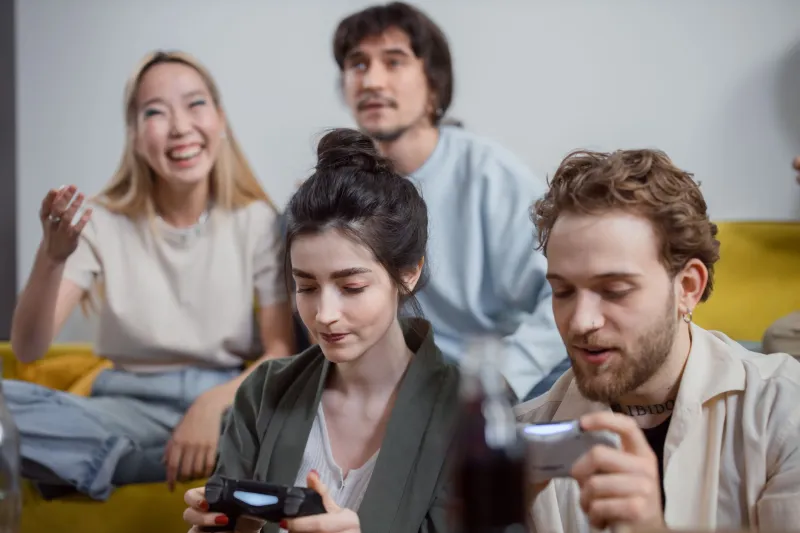
Here's a scenario that probably sounds familiar. You fire up a game on a Friday night, maybe because your regular crew is busy or just because you felt like jumping in solo. You get dropped into a lobby with four strangers. An hour later, you're cackling at something one of them said, defending each other like you've known each other for years, and genuinely bummed when the session ends.
That's not an accident. That's a feature — even if nobody designed it on purpose.
The unexpected intimacy that blooms between strangers in online games has become one of the most interesting social phenomena of the past decade, and it's happening millions of times a day across platforms, genres, and living rooms all over the country.
The Science of Instant Bonding (Yes, It's Real)
Psychologists have a name for what happens when people bond quickly under shared pressure: they call it "accelerated intimacy." It typically requires three ingredients — shared goals, a little bit of risk or stakes, and enough vulnerability to let your guard down.
Games, it turns out, are basically a perfect delivery mechanism for all three.
When you're mid-round in Among Us trying to figure out who's lying, or you're one wrong answer away from losing a Jackbox game in front of six people, your brain doesn't really distinguish between "people I've known for ten years" and "people I met eleven minutes ago." The emotional experience is the same. The laughter is real. The frustration is real. The moment someone saves you right when you needed it — that's real too.
Dr. Jesse Fox, a communication professor at Ohio State who studies social interaction in digital environments, has noted that game spaces strip away a lot of the social armor people carry into face-to-face encounters. You're not worried about how you look or what your apartment says about you. You're just playing. And that low-barrier environment makes it easier for genuine personality to come through fast.
Why Your Old Friends Might Actually Be the Problem
This is the part nobody really wants to admit: sometimes gaming with your closest friends is kind of... stressful?
There's history there. There are expectations. Someone always has to be the one who "carries," and everyone knows it. Existing social dynamics from real life — who's funnier, who's more competitive, who always gets too intense — all of that bleeds into the session.
Strangers don't bring any of that baggage.
When you drop into a random lobby, there's a clean slate. Nobody knows you're the one who rage-quit that Mario Kart tournament in 2019. Nobody's keeping score from last week. You're just a username and a play style, and that anonymity is genuinely freeing.
Streamers talk about this all the time. Ask anyone who plays party games live on Twitch or creates content around games like Phasmophobia or Fall Guys — some of their best, most shareable moments came from random matchmaking, not planned sessions with friends. The unpredictability is the magic.
The Jackbox Effect
If there's one game series that's accidentally become a case study in manufactured intimacy, it's the Jackbox Party Pack franchise.
The genius of Jackbox is that it doesn't just test gaming skill — it tests personality. Games like Quiplash and Drawful reward wit, absurdity, and a willingness to be a little weird in front of people. And when strangers play together, something interesting happens: people reveal themselves faster than they would in almost any other social setting.
You find out who the chaotic one is by round two. You figure out who has the driest sense of humor by round three. By the end of a full session, you've got a surprisingly accurate read on five people you'd never spoken to before.
Several Jackbox community members on Reddit have described meeting their current best friends — and in at least a handful of documented cases, their romantic partners — through random Jackbox sessions during the pandemic lockdowns. What started as "I'm bored and this online room code was posted in a Discord" turned into relationships that exist entirely outside the game now.
That's not a small thing.
Asynchronous Play and the Slow Burn Connection
Not all gaming intimacy happens in real time, either. Games that involve asynchronous communication — leaving notes for other players, responding to choices made hours earlier, reacting to something a stranger built — create a different but equally powerful kind of connection.
Think about the handwritten messages you leave in Dark Souls, or the community-built levels in games like Dreams or LittleBigPlanet. Someone poured time and creativity into something, left it in the world, and you experienced it. That's a one-way interaction, technically — but it doesn't feel like one.
Independent developers have been leaning into this hard. A number of smaller studios have built their entire design philosophy around fostering stranger-to-stranger connection, whether through shared world states, community-driven story elements, or even just robust emote systems that let players communicate without words.
The goal isn't just engagement — it's the feeling that somebody else is out there, and they made something for you to find.
A Million Ways to Meet Someone
At 1Mil Games, we spend a lot of time thinking about what makes gaming feel alive. And one of the answers we keep coming back to is this: it's the people. Not just your people — everybody's people.
The random teammate who covered your back without being asked. The stranger in a Jackbox lobby who made a joke so perfectly timed it became a reference point for the rest of the night. The player who left a message in a dark corridor that somehow felt like it was meant for you specifically.
These aren't accidents. They're what games are uniquely positioned to create — and what a lot of big-budget titles, ironically, have gotten worse at enabling. The indie and casual gaming space, by contrast, keeps finding new ways to make strangers feel like something more.
Maybe the real achievement isn't finishing the game. Maybe it's the person you met while you were trying to.
How to Actually Make It Happen
If you want more of these moments in your own gaming life, here's the honest advice: stop waiting for the perfect session with the perfect crew. Jump into a random lobby. Say something in the chat. React when something goes well. Be the person who makes the experience feel like more than just a match.
The games that foster this best right now — Among Us, the Jackbox series, Phasmophobia, It Takes Two with a stranger via friend-lending features, even cozy community games like Stardew Valley multiplayer — all have one thing in common. They leave room for personality. They don't script every interaction.
And in that space between the rules and the randomness, that's exactly where the good stuff happens.