Buried Treasure: Why the Greatest Indie Games Are Hiding Right Under Your Nose

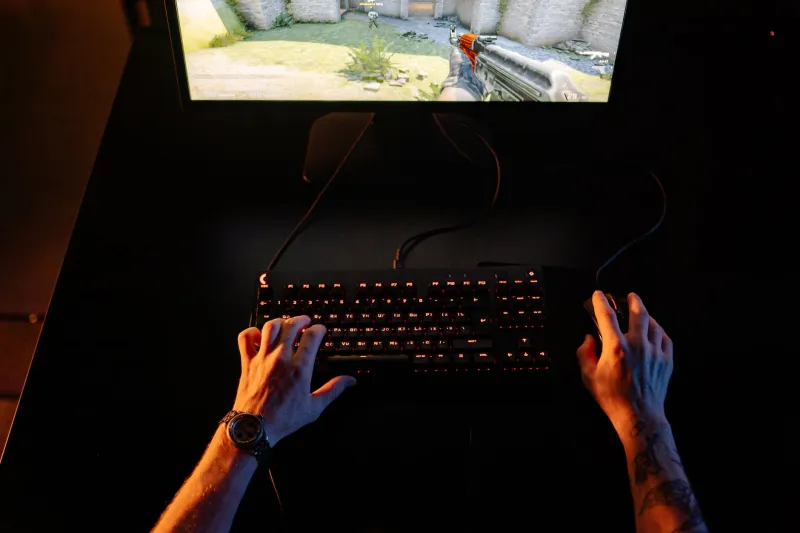
Photo: Joel McDonald (Polyculture), CC BY-SA 3.0, via Wikimedia Commons
Somewhere on Steam right now, there's a game that would absolutely wreck you emotionally, make you laugh until your sides hurt, or pull you into a 40-hour rabbit hole you didn't see coming. It costs four dollars. It has 23 reviews. You will probably never find it.
That's not pessimism — it's just the reality of modern game discovery. We're living in a golden age of indie development, where solo devs and tiny studios are cranking out genuinely spectacular work at an almost absurd pace. And yet most players are stuck cycling through the same algorithmically-approved titles, missing entire galaxies of great games that exist just a few clicks outside their usual orbit.
So what's actually going on here? And more importantly, how do you break out of it?
The Abundance Trap
Here's the cruel irony of the current gaming landscape: there are too many good games. Steam alone sees somewhere between 10,000 and 14,000 new titles released every single year. The Nintendo eShop, itch.io, and mobile storefronts add thousands more. For players, that should be amazing news. In practice, it creates a kind of decision paralysis that sends most people running straight back to whatever's trending on Twitch.
Algorithms are designed to show you more of what you already like. That sounds helpful, right? But when you're talking about a medium as diverse as gaming, "more of what you like" can quickly become a cage. If you've been playing big-budget action RPGs, the algorithm isn't going to surface a quiet, handcrafted puzzle game made by a two-person team in Ohio — even if that game might genuinely be one of the best things you'd ever play.
The result is a weird bifurcation. A small handful of indie titles break through and become cultural moments — your Hollow Knights, your Stardew Valleys, your Untitled Goose Games. Everything else, no matter how good, quietly drowns.
What Developers Are Up Against
Talk to any indie dev who's shipped a game in the last few years, and you'll hear a version of the same story. The development part? Hard, but manageable. The visibility part? A completely different beast.
Devs describe a landscape where the traditional playbook — build a mailing list, post dev logs, hit up gaming journalists — just doesn't move the needle the way it used to. Gaming media has contracted significantly over the past decade, and the outlets that remain are understandably focused on titles with bigger marketing budgets and guaranteed audience interest.
Social media is a mixed bag. A clip can go viral and drive a genuine sales spike, but virality is essentially random, and you can't build a business on randomness. Many indie devs describe spending as much time on marketing as on actual development — and still launching to near-silence.
The pricing problem compounds everything. Indie games are often priced low because devs know players are price-sensitive and they're competing against massive titles with name recognition. But a $4.99 price tag can actually work against a game's discoverability, because lower prices often correlate with lower algorithmic priority on some platforms. It's a trap with no clean exit.
The Algorithm Isn't Your Friend (But It's Not Your Enemy Either)
It's tempting to just blame the algorithm and move on, but that's not quite fair. Recommendation systems are genuinely useful — they're just not sufficient on their own. The problem is that most players treat algorithmic suggestions as the whole menu when they're really just the appetizer.
Storefront algorithms are optimized for engagement and conversion, not for helping you find the most interesting game you've never heard of. Those are different goals, and understanding that distinction is the first step toward actually expanding your gaming horizons.
The good news: there are ways to actively game the system in your favor, and none of them require much effort.
Practical Ways to Actually Find Hidden Gems
Go deep on itch.io. If you're not regularly browsing itch.io, you're missing the most fertile ground in indie gaming. The platform has essentially no curation gatekeeping, which means it's chaotic — but that chaos is where the genuinely weird, original stuff lives. Use the tag system aggressively. Search for mechanics or themes you love, not just genre labels.
Follow developers, not just games. When you finish an indie game you love, look up the studio or solo dev and follow them wherever they're active. A lot of great indie games get announced and released with almost no fanfare, but if you're already following the creator, you'll catch it.
Get into niche gaming communities. Subreddits, Discord servers, and forums built around specific genres or playstyles are incredible discovery engines. Real humans with actual taste are recommending things to each other constantly, and those recommendations tend to be far more targeted than anything an algorithm will surface. The r/patientgamers and r/indiegaming communities on Reddit are solid starting points.
Use "More Like This" as a jumping-off point, not a destination. When an algorithm recommends something, don't just click the top result. Scroll down. Look at what other players who liked that game also played. Follow those chains a few links deep and you'll often land somewhere genuinely surprising.
Watch smaller streamers and content creators. Big streamers play big games — that's how they keep their audiences. But mid-size and smaller creators often dig into the indie catalog specifically because they want to cover things nobody else is talking about. Finding a streamer or YouTuber whose taste matches yours is like having a personal scout.
Check the bundle archives. Humble Bundle and itch.io run bundles constantly, and they're a great backdoor into games you might never have noticed. Even if you bought a bundle mostly for one headliner title, take an hour to actually look at everything else in it.
The Million-Game Problem Is Actually a Million-Game Opportunity
Here at 1Mil Games, we talk a lot about the sheer volume of ways there are to play — and honestly, the indie discovery problem is one of the most interesting challenges in gaming right now precisely because the upside is so enormous. We're not dealing with a shortage of great games. We're dealing with a navigation problem.
Every week, someone somewhere ships something genuinely special. A little horror game with a twist that'll keep you up at night. A platformer with controls so tight it feels like the dev spent years just getting the jump arc right. A narrative game built around a mechanic nobody's tried before. These things exist. They're real. They're usually cheap.
The players who find them consistently aren't lucky — they're just deliberate. They've built habits around discovery instead of waiting for discovery to come to them. They follow developers. They hang out in communities. They browse weird corners of storefronts with the same energy they'd bring to flipping through a record store.
The $5 masterpiece is out there. Probably several of them. You just have to go looking.