One Game, Zero Social Life: How Certain Indie Titles Hijack Your Brain and Never Let Go
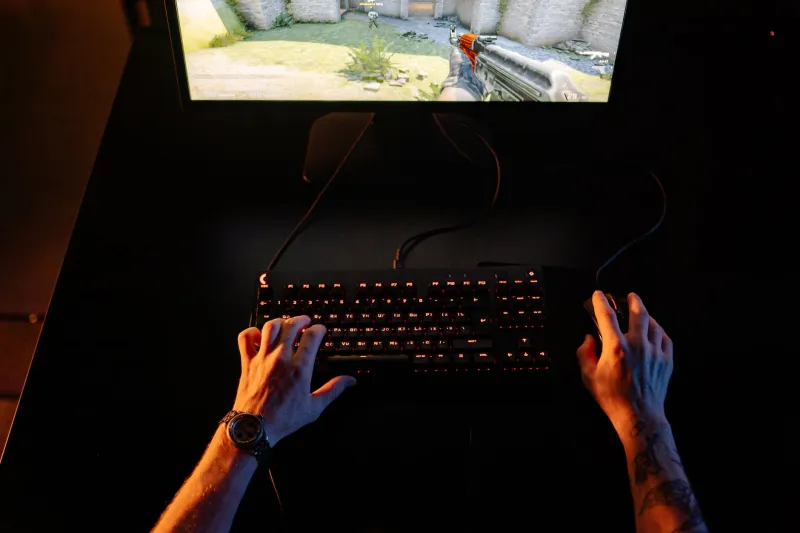
It starts innocently enough. You grab a game on a Tuesday night because it's on sale and the thumbnail looked interesting. Maybe it cost you fifteen bucks. Maybe twenty. You figure you'll knock out an hour before bed.
Six hours later, the sun is coming up, your coffee has gone cold twice, and you've completely forgotten that you used to have hobbies.
If that scenario sounds familiar, you're not alone — and you're definitely not weak-willed. You just got hit by one of gaming's most fascinating and weirdly specific phenomena: the indie title that takes over your entire life.
The $20 Wrecking Ball
There's a particular kind of game that does this better than anything else on the market, and it almost never comes from a massive studio with a nine-figure budget. It comes from a two-person team in someone's apartment, or a solo developer who spent four years obsessing over one mechanic until it felt exactly right.
Think about the games that have pulled this off over the years. Stardew Valley convinced millions of people to abandon weekends. Hollow Knight made players forget they owned other games. Hades had folks running "just one more" escape attempt at 2 a.m. on a work night. None of these launched with Super Bowl commercials or midnight release parties at GameStop. They spread the old-fashioned way — through word of mouth, through clipped gameplay moments, through one friend grabbing another by the arm and saying, you need to play this right now.
The price point almost becomes a joke in retrospect. Twenty dollars for something that consumes 300 hours of your life? That's a better hourly entertainment rate than pretty much anything else you can buy in America.
What's Actually Happening in Your Head
So why do certain games do this while others, even good ones, don't?
Game designers and players who've lived through this obsession point to a surprisingly consistent set of ingredients. First, there's what developers sometimes call the "just one more" loop — a core gameplay cycle that ends just before you feel fully satisfied, pulling you into the next attempt, the next harvest, the next run. It's not manipulation so much as it is perfect pacing.
Then there's the feeling of genuine mastery. Unlike a lot of big-budget titles that hold your hand through every obstacle, the indie games that achieve cult obsession tend to respect your intelligence. They let you fail. They let you figure things out. And when you finally crack a puzzle or beat a boss you've been stuck on for three days, that hit of accomplishment is real. You earned it.
Finally — and this one gets underestimated — there's world-building that rewards curiosity. The games that swallow people whole tend to have layers. Hidden lore. Weird little details tucked into corners. Characters who say different things depending on when you talk to them. Players describe this as feeling like the game wants to be explored, like there's always something new just around the next corner.
Players Who've Been There
Ask around in any gaming community and you'll collect stories fast. Forum threads about Terraria are full of people describing how they looked up and realized three months had passed. Celeste players talk about the game in almost therapeutic terms, like it helped them work through something they couldn't name. Disco Elysium fans will corner you at parties — if they leave the house at all — to explain why it's the most important piece of storytelling they've ever experienced.
What's interesting is that most of these players don't describe the experience negatively, even in retrospect. Yeah, some friendships got a little neglected. Yeah, the gym membership went unused for a while. But there's a genuine warmth when people talk about that period — like they're describing a trip they took, somewhere vivid and absorbing that regular life couldn't quite match.
That said, not everyone comes out of it laughing. It's worth acknowledging that for some players, the line between passionate engagement and unhealthy escapism gets blurry. If a game is filling a void rather than adding to an already decent life, that's a different conversation. The games themselves aren't the problem — but they can absolutely amplify whatever's already going on.
What Developers Actually Think About This
Here's the part that might surprise you: a lot of indie developers are genuinely conflicted about making something this consuming.
Solo and small-team devs often talk about wanting to create experiences that feel meaningful, not just sticky. There's a difference, they'll tell you, between a game that's compelling because it's good and one that's compelling because it's engineered to exploit your reward circuits. The best indie games tend to aim for the former — they want you to stay because you're genuinely invested, not because you've been psychologically maneuvered into it.
That's actually one of the reasons indie titles pull this off more often than big studio releases. A developer who spent years building something they personally cared about tends to make design decisions based on what feels right rather than what a monetization consultant recommended. The obsession players feel often mirrors the obsession the developer had while making it.
The Hobby Graveyard Is Real
If you've ever glanced at your guitar collecting dust, your half-finished watercolor set, or your running shoes still in the box, and thought yeah, that was before the game — welcome to the club. It's a big club. It has very active Discord servers.
The hobbies don't always stay abandoned, for what it's worth. Most players describe a natural arc: the intense honeymoon phase, the deep dive, the gradual return to regular life with the game still present but no longer all-consuming. Some even say the focus and problem-solving they practiced in-game quietly bled back into their real-world interests.
But for a window of time — sometimes weeks, sometimes months — that one game was the whole world. Everything else was just the loading screen.
Why This Is Actually Kind of Beautiful
At 1Mil Games, we spend a lot of time thinking about what makes gaming special, and honestly, this phenomenon might be one of the purest examples of the medium doing what it does best. A tiny team with a vision and a tight budget creates something so genuinely compelling that it rewires how millions of people spend their free time. No IP franchise. No celebrity endorsement. Just a good game, word of mouth, and the unstoppable human impulse to find something worth caring about.
The $20 game that ate your social calendar for a season? That's not a cautionary tale. That's a love story.
Just maybe set an alarm next time.