Designed for the Dash: How Developers Are Engineering Games Around Your Lunch Break

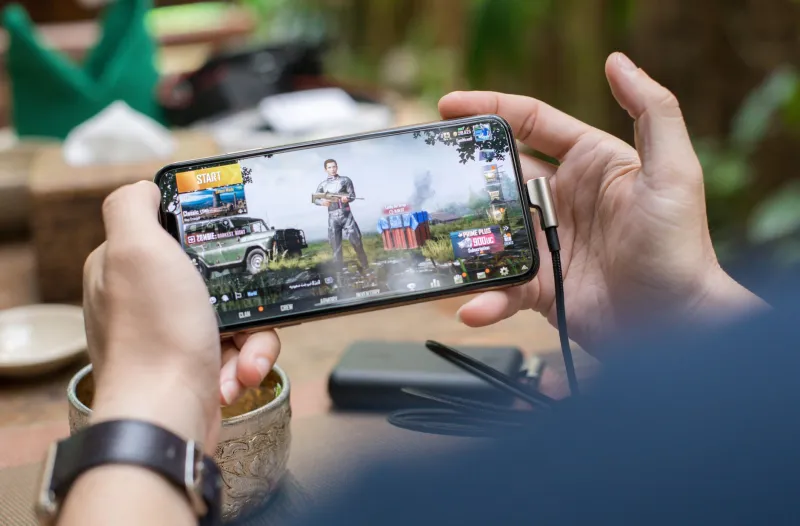
Photo by Photo by Zoshua Colah on Unsplash on Unsplash
Picture this: you've got exactly 14 minutes until your subway pulls into your stop. You crack open your phone, tap into a game, and by the time you're stuffing your earbuds back into your pocket, you've completed a full dungeon run, leveled up twice, and made a decision that'll ripple through the rest of your playthrough. You didn't feel rushed. You felt done.
That's not an accident. That's engineering.
A quiet but seismic shift is happening in how games get built — and it starts with a stopwatch.
The Commute as a Design Document
For a long time, "good" game design meant depth, length, and complexity. The more hours a title could swallow, the better. But a growing wave of indie and mobile developers is flipping that script entirely. Instead of asking "how long can we keep players engaged," they're asking something more precise: what can we deliver in 15 minutes or less?
That question sounds simple. It is absolutely not.
Designing for micro-sessions forces developers to compress decision-making, emotional payoff, and mechanical satisfaction into windows that most AAA studios wouldn't even use for a loading screen. Every tutorial beat, every reward drop, every narrative hook has to earn its place in a brutally tight timeline.
Jordan Kessler, an indie developer based in Austin who released the well-received mobile puzzler Gridlock Garden last year, described it this way: "I literally rode the Red Line in Chicago for a week straight, timing everything. I wanted to know exactly what players could realistically accomplish between stops. It changed everything about how I structured progression."
He's not alone in that kind of fieldwork.
The Science of the Short Session
There's real psychology behind why bite-sized gameplay hits differently. Researchers who study behavioral engagement have long noted that humans respond strongly to what's called a "completion loop" — the satisfying click of finishing something. Traditional games stretch that loop over hours. Micro-designed games stack dozens of smaller loops inside a single session.
For players, this creates an almost addictive sense of momentum. You don't just feel like you played something. You feel like you accomplished something — even if you were just killing time between meetings.
Marcus Webb, a 29-year-old logistics coordinator from Atlanta, puts it plainly: "I used to feel guilty opening a game on my break because I knew I'd just scratch the surface and put it down frustrated. Now I've got three games on my phone where I can actually finish something in the time it takes me to eat a sandwich. That's a completely different feeling."
That feeling — that sense of genuine completion — is exactly what micro-paced designers are chasing.
Rethinking What "Complete" Even Means
Here's where things get philosophically interesting. The rise of commute-friendly design is forcing the industry to interrogate a concept it's taken for granted forever: what does it mean for a gameplay session to feel whole?
For decades, the answer was tied to narrative endpoints — beat the level, finish the chapter, defeat the boss. But micro-design suggests something different. A session can feel complete based purely on rhythm. If a player enters a satisfying state of flow, makes meaningful choices, and exits with a tangible reward or story beat, the session is complete — regardless of how long it lasted.
This is why some of the most innovative mobile and indie titles right now aren't just "shorter games." They're games with entirely different structural DNA. Instead of a single long arc, they're built like a series of short stories — each one coherent on its own, each one feeding into something larger.
Tamika Rhodes, a game designer and content creator who covers indie development from her base in Portland, sees this as a genuine artistic evolution. "The developers doing this well aren't cutting corners," she says. "They're actually doing more work. Compression is harder than expansion. Making something feel rich and satisfying in 12 minutes takes more craft than making it feel that way in 12 hours."
The Attention Crisis Nobody Wants to Talk About
There's an elephant in the room here, and it's worth naming: gaming has an attention problem.
With notification pings, social media spirals, and the general chaos of modern American life, even dedicated gamers are finding it harder to carve out the two- or three-hour blocks that traditional games demand. Backlogs are growing. Guilt is mounting. Players who genuinely love games are bouncing off experiences they'd probably enjoy — simply because the time commitment feels impossible.
Micro-designed games aren't just capitalizing on this reality. In a lot of ways, they're solving for it.
By meeting players exactly where they are — on the bus, in the waiting room, on a 15-minute break between Zoom calls — these titles are keeping people in gaming who might otherwise drift away entirely. That's not a small thing. That's the difference between a hobby someone maintains and one they abandon.
Not Just Mobile: Indie Devs Are Catching On
While mobile is the obvious home for this design philosophy, it's spreading. Indie developers releasing on PC and even console are starting to build session structures that respect shorter time windows — offering natural stopping points every 10 to 20 minutes, designing runs and loops that feel satisfying without demanding a full evening.
Roguelikes have been doing a version of this for years, which partly explains the genre's massive resurgence. A run in Hades or a round in Balatro can be as short or as long as you need it to be, but each individual loop feels complete. That structural flexibility is increasingly being seen as a feature, not a limitation.
The broader takeaway? The 15-minute session isn't a compromise. For a lot of players, it's the preferred format — and designers who understand that are building some of the most compelling games in the industry right now.
Play Your Way, On Your Schedule
At 1Mil Games, we're big believers in the idea that great gaming fits your life — not the other way around. The developers engineering experiences around your commute, your coffee run, your ten-minute window between chaos and more chaos? They're not lowering the bar. They're raising it in a direction the industry is only starting to appreciate.
So next time you tap into something on your phone and feel genuinely satisfied in the time it takes to finish your cold brew, tip your hat to the designer who timed their game against a stopwatch and obsessed over every second. That's craft. And it's changing everything.