Old School Is the New Cool: How Retro Consoles Took Over the Gaming Scene
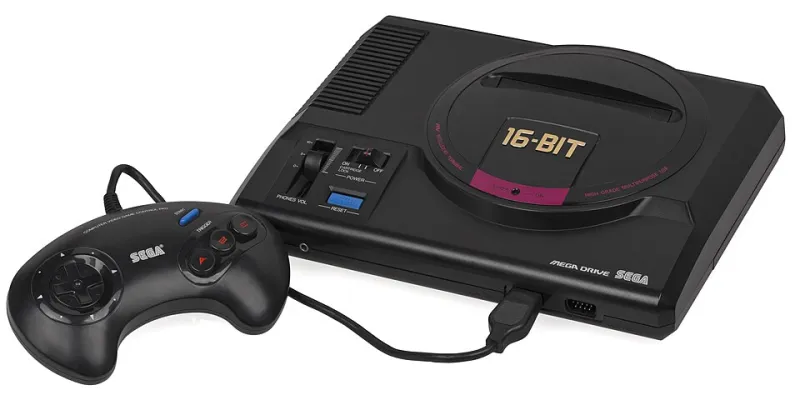
Photo: Evan-Amos, Public domain, via Wikimedia Commons
Walk into any thrift store in America right now and you'll notice something strange. The gaming section — once a graveyard of forgotten plastic — is getting picked clean. SNES cartridges vanish within hours of hitting the shelf. Original Game Boys show up on eBay with bidding wars attached. A working N64 with its original controllers can run you more than a brand-new budget gaming PC. Something has shifted, and it's not just middle-aged collectors chasing childhood memories.
A massive wave of younger players — people who weren't even born when Donkey Kong Country dropped — are going out of their way to experience gaming on old hardware. And they're doing it on purpose.
The Rebellion Nobody Saw Coming
To understand why retro is exploding right now, you have to look at what players are pushing back against. The modern AAA landscape is genuinely impressive in a lot of ways — the graphics are jaw-dropping, the open worlds are enormous, and the production budgets are bigger than most Hollywood blockbusters. But somewhere along the way, a lot of that ambition started feeling exhausting.
Hundred-hour campaigns. Mandatory online connectivity. Microtransaction menus nested inside other microtransaction menus. Games that ship broken and get patched over months. Update files bigger than the original game. For a growing chunk of the gaming population, that's not fun — it's a second job.
Enter the 8-bit antidote.
Old games don't ask much from you. You pick up a controller, you figure out the rules in about thirty seconds, and you either win or you don't. There's a directness to that experience that modern design has largely abandoned. And when you've spent three hours downloading a day-one patch just to access your $70 purchase, the appeal of blowing on a cartridge and having it just work hits differently.
Discovery Disguised as Nostalgia
Here's the thing that makes the current retro wave genuinely interesting: a huge portion of the people driving it have no nostalgia to speak of. They didn't grow up with a Super Nintendo. They're not chasing a feeling they remember — they're discovering something they never had.
For those players, retro gaming isn't about going back. It's about going sideways. It's an entire alternative gaming history that existed before they were paying attention, and now they're exploring it like a genre they somehow missed. The NES library alone contains hundreds of titles that never got a second look because they were overshadowed by whatever was releasing that Christmas season. Now, with YouTube deep dives and gaming communities obsessively cataloguing forgotten gems, those games are getting their moment.
Platforms like the Analogue Pocket and MiSTer FPGA have made it easier than ever to play old hardware authentically, without the headaches of aging electronics. Emulation has only gotten more sophisticated and accessible. And Nintendo's own mini console releases — however limited — proved there was a genuine mass-market appetite for this stuff that the industry had been underestimating for years.
The Economics of Going Retro
The money side of retro gaming is a whole conversation on its own. Prices for physical retro games have been climbing steadily for years, and certain titles have crossed into genuinely absurd territory. A sealed copy of Stadium Events for NES? That's a mortgage payment. Even common cartridges that used to sell for a couple of bucks at garage sales are now listed at prices that would make you do a double-take.
For collectors, that appreciation has turned retro gaming into something weirdly close to investing. But for everyday players who just want to experience the classics, it's created a parallel economy built around emulation, flash carts, and reproduction hardware. The community has essentially built its own infrastructure to keep these games playable without requiring a second income.
At the same time, indie developers have been watching all of this and taking notes.
New Games Built to Feel Old
One of the most fascinating side effects of the retro renaissance is how thoroughly it's influenced the indie development scene. Games like Shovel Knight, Celeste, Undertale, and more recently Lunacid and DUSK aren't just inspired by old-school aesthetics — they're engineering specific feelings of limitation into their design on purpose. Chunky pixels. Chiptune soundtracks. Lives systems. Save points instead of autosaves.
This isn't laziness or budget constraints. It's a deliberate creative choice. Developers have realized that the constraints of old hardware weren't bugs — they were features. When you can't render a photorealistic face, you design characters that communicate through body language and clever sprite work. When you can't store hours of voice acting, you write dialogue that actually earns its words. Limitation breeds creativity, and a lot of indie devs are choosing to impose those limits on themselves even when modern tools would let them do otherwise.
The result is a thriving subgenre of new games that feel like they've been excavated from 1995 rather than coded last Tuesday. And players are eating it up.
Community Is the Real Engine
No gaming renaissance survives without community, and retro gaming has built some of the most passionate ones around. From the speedrunning circuits that dissect classic games frame by frame, to the ROM hacking communities that build entirely new experiences inside old engines, to the Discord servers where collectors share finds and debate which version of a game is definitive — the social infrastructure around retro gaming is enormous.
Platforms like Twitch have given this community a massive visibility boost. Watching someone play through Mega Man 2 blind for the first time or seeing a veteran dismantle Castlevania: Symphony of the Night in under twenty minutes pulls in audiences who might never have thought to seek these games out on their own. It's word-of-mouth at scale, and it's converting new fans constantly.
What This Means for the Future
The retro gaming wave isn't a fad. It's a correction. Players are recalibrating what they actually want out of games, and a lot of them are landing on: fun, accessible, and complete. Games that respect their time. Games with a beginning, a middle, and an end. Games that don't require a subscription to fully enjoy.
Whether that means hunting down an original cartridge, firing up an emulator, or buying a brand-new indie game designed to feel like it's running on thirty-year-old hardware, the message is the same. Simpler can be better. Old doesn't mean obsolete. And sometimes the most exciting thing in gaming is something that already existed — you just hadn't found it yet.
At 1Mil Games, we've always believed there are a million ways to play. Turns out, a whole lot of those ways were invented decades ago — and people are only now catching up.