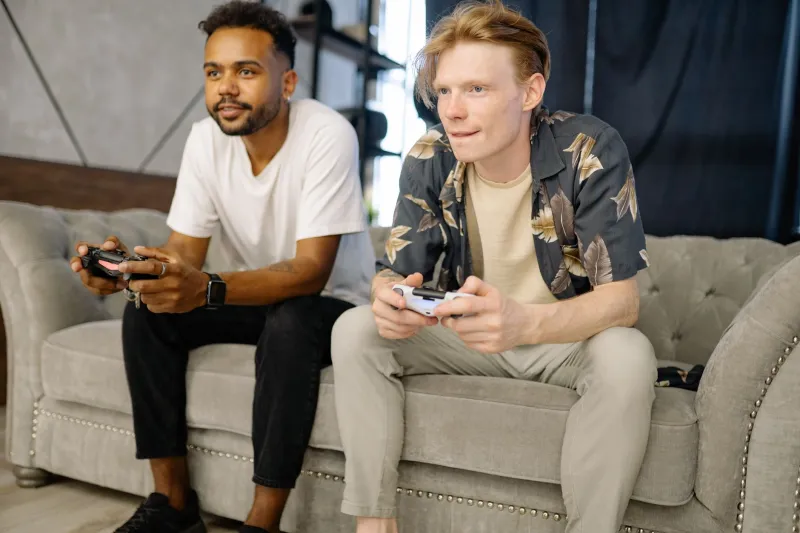
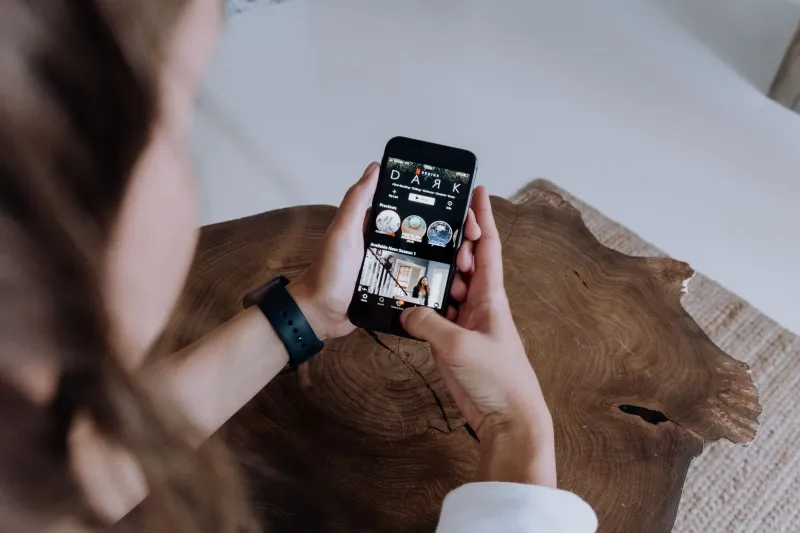
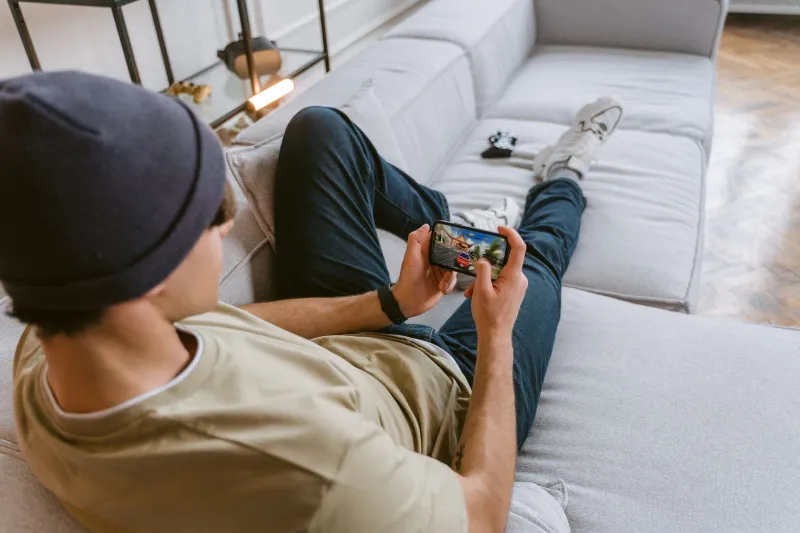
Same Couch, Different Games: The Asymmetrical Multiplayer Takeover Is Here and It's Glorious
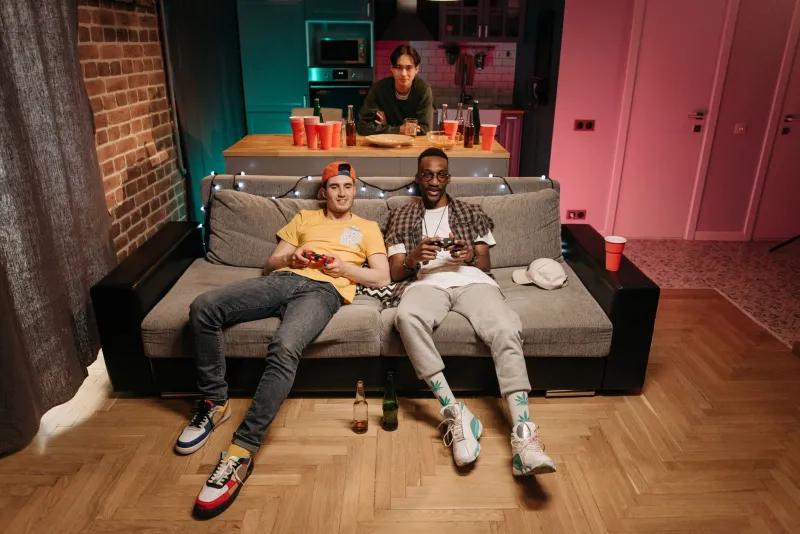
Somebody in your friend group always wins. You know who it is. They've memorized every map, they've got the fastest reaction time, and traditional multiplayer games basically exist as a vehicle for their ego. Sound familiar?
Asymmetrical multiplayer games have entered the chat — and they are specifically designed to blow that dynamic completely up.
The premise sounds almost counterintuitive at first: what if every player in the same match had different abilities, different objectives, and different win conditions? What if the person playing defense was working against an entirely different ruleset than the person playing offense? What if the game was less about who practiced the most and more about who could read the room, adapt on the fly, and maybe talk a little strategic trash?
That's asymmetrical multiplayer. And right now, it's taking over how American friend groups play together.
When Everyone's Playing a Different Game
The clearest way to understand the appeal is to just describe what playing one of these games actually feels like.
Picture Among Us — still one of the most downloaded mobile games in history. Crewmates are trying to complete tasks and identify the impostor. The impostor is trying to eliminate crewmates and avoid detection. Same lobby, completely different games. The crewmate experience and the impostor experience have almost nothing in common. And yet somehow, both sides are equally engaged, equally stressed, and equally likely to start yelling at the TV.
That's the magic. Traditional multiplayer games create a winner and a loser but often the same experience. Asymmetrical games create multiple different experiences that collide — and the collision is where all the fun lives.
Deceit, Dead by Daylight, Unfortunate Spacemen — the genre has been building momentum for years. But what's happened recently is that the format has jumped off PC and console and landed hard on mobile and casual platforms, which means it's reaching way more people.
Why American Gaming Culture Was Made for This
Let's be real about something. American gaming culture, especially in social settings, runs on two things: competition and chaos. We love a comeback story. We love a twist. We love the moment when the person who was losing the whole game suddenly pulls off something that makes everyone in the room lose their mind.
Traditional symmetrical multiplayer delivers that sometimes. Asymmetrical games deliver it almost every session by design.
When you've got one player as a giant monster and four players as hunters, or one player as a ghost manipulating the environment while others try to figure out what's happening, you're building in structural surprise. The power balance can flip. The underdog can win. The cocky player can get completely outmaneuvered by someone who's never played before because they stumbled into a strategy nobody expected.
That unpredictability is crack for friend groups. It's why Jackbox Party Pack games — many of which have asymmetrical elements — have become a staple at American gatherings. It's why Goose Goose Duck blew up as a mobile title by taking the social deduction format and layering in wildly different roles with wildly different abilities.
Every session feels like a different game. That's incredibly hard to manufacture. Asymmetrical design does it structurally.
The Design Challenge Nobody Talks About Enough
Here's the thing developers working in this space will tell you straight up: designing asymmetrical games is brutally hard.
You're not balancing one experience. You're balancing two, three, or four completely different ones simultaneously, and they all have to feel fair even when they're objectively unequal. The monster has to feel powerful enough to be fun to play without being so dominant that the hunters give up. The social deduction game has to give impostors enough tools to deceive without making crewmates feel helpless.
Get the balance wrong in either direction and the whole thing falls apart. Players on the weaker side feel cheated. Players on the stronger side get bored. The session dies.
Get it right, though, and you've built something that generates stories. And games that generate stories — "remember when Jake was the impostor three rounds in a row and nobody caught him until the very end" — are games that people come back to obsessively.
Smaller studios have actually had an edge here. Without the pressure to build an enormous game, they can laser-focus on getting the asymmetry right. Many of the best titles in this space came from tiny teams who spent months just tuning the power balance between roles before adding anything else.
Mobile Is Where the Format Is Exploding
The asymmetrical multiplayer boom is happening everywhere, but mobile is where it's growing fastest — and that makes total sense.
Mobile gaming already dominates casual social play in the US. When you're hanging out with friends, the lowest-friction option wins. You don't need a TV, a console, or four controllers. You need phones, which everybody already has. Asymmetrical games built for mobile lean into this perfectly — quick setup, short sessions, high drama, instant rematches.
Among Us proved the model worked at massive scale. The titles that followed have been refining it. Games like Project Winter and newer entries in the social deduction space have added layers of complexity that reward players who want to go deeper while staying accessible enough for someone who's never played before.
For casual gaming communities, this is the sweet spot: easy to start, hard to master, and infinitely replayable because the human element is always different.
The New Standard for Playing Together
Couch co-op in the traditional sense — everyone on the same team, same screen, same objectives — isn't dead. But it's been joined by something that might be even better for certain kinds of friend groups: competitive-but-friendly chaos where nobody quite knows who's going to win until the last possible second.
At 1Mil Games, we think asymmetrical multiplayer represents one of the most genuinely exciting design directions in casual and mobile gaming right now. It's not a gimmick. It's a structural answer to the question every game night eventually faces: how do you keep things interesting when the same people keep playing together?
The answer, apparently, is to give everyone a different game and let them figure it out.
Your friend group will never be the same. And honestly? That's kind of the point.