Play It in Pieces: How Snackable Games Are Taking Over America's Spare Moments
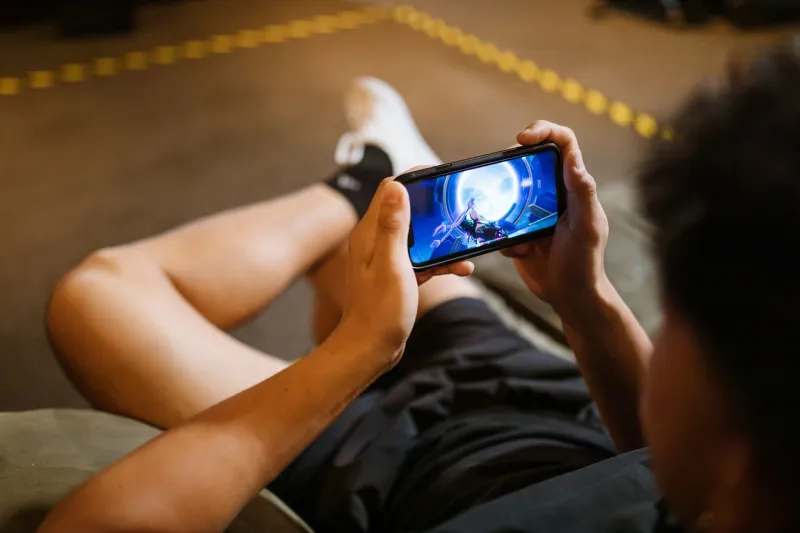
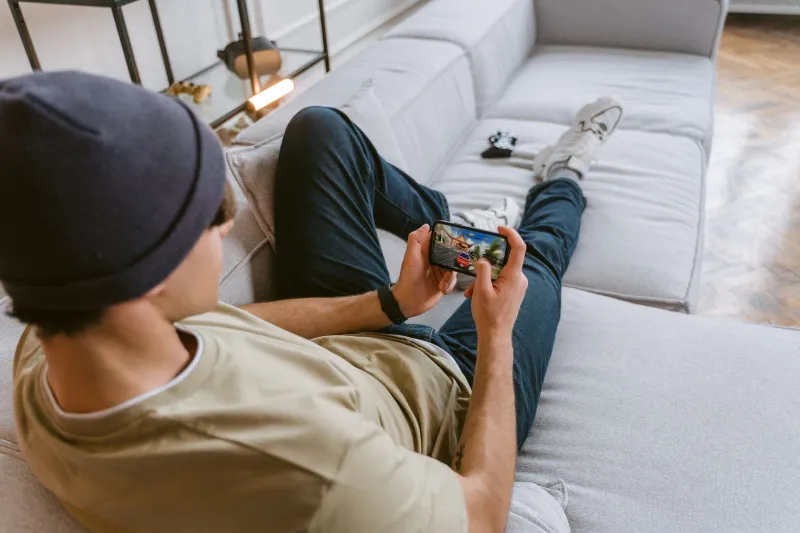
There's a quiet revolution happening on the 6 train in Manhattan, in break rooms in Des Moines, and on lunch benches outside offices in Austin. It doesn't look like much — just someone staring at their phone for 12 minutes, tapping away with total focus. But what they're doing is rewriting the rules of what a video game can be.
Welcome to the era of snackable gaming: intentionally compact, deeply satisfying experiences built not for the couch on a Saturday afternoon, but for the stolen moments scattered throughout a busy American day.
The 15-Minute Window Nobody Talked About
Game designers have long obsessed over session length. Traditional console developers chase the "just one more hour" feeling. Mobile giants engineer endless loops designed to keep you scrolling and tapping indefinitely. But a growing wave of indie developers noticed something different in the data — and in their own lives.
The average American worker gets a 30-minute lunch break. Commutes on public transit average around 27 minutes each way in major metro areas. A mid-afternoon mental reset? Maybe 10 minutes if you're lucky. These aren't gaming sessions by the old definition. But they're absolutely gaming sessions by the new one.
Indie studios started asking a genuinely radical question: what if a game was done in 15 minutes — not just playable for 15 minutes, but actually complete, satisfying, and worth the time? The answers they came up with are some of the most creative design work happening in games right now.
Designing for the Clock, Not Against It
Building a short game that feels substantial is harder than it sounds. Strip away the padding from a 40-hour RPG and you don't get a great 15-minute game — you get a fragment. True snackable design means engineering every mechanic, every narrative beat, and every reward loop around a compressed timeline from the ground up.
Some developers lean into puzzle structures that deliver a clean "aha" moment within a few minutes of play. Others build roguelite runs that feel genuinely complete even when they end fast — death isn't failure, it's the natural punctuation of the experience. A handful of narrative-focused indie teams are experimenting with micro-stories: tiny emotional arcs that hit harder because they don't overstay their welcome.
What all of these approaches share is respect. Respect for the player's time as a finite, valuable resource — not a target to maximize engagement against. That shift in philosophy is more significant than it might seem.
Why This Hits Different for American Players
American gaming culture has always had a complicated relationship with time. The "hardcore" identity was built around long sessions, deep investment, and bragging rights measured in hours logged. But that identity was always exclusionary, even if nobody said it out loud. Parents, shift workers, college students with packed schedules, people managing chronic illness — a huge slice of America was quietly sidelined from the conversation.
Snackable indie games don't just accommodate those players. They were built for them. And it turns out that audience is enormous.
Look at the indie charts over the last couple of years and you'll notice a pattern: compact, cleverly designed games with tight loops are punching way above their weight in terms of downloads, reviews, and word-of-mouth. They spread fast because they're easy to recommend. "You can finish a run in 12 minutes" is a much easier sell to a busy friend than "it really opens up after about 20 hours."
The Subway Test and Other Unofficial Benchmarks
Some developers in the snackable space have started using informal real-world tests to evaluate their games. The "subway test" is exactly what it sounds like: can a player pick it up, get genuinely engaged, reach a satisfying stopping point, and put it down — all before their stop arrives? If the answer is no, something in the design needs rethinking.
Others talk about the "waiting room standard" — the game has to be good enough to make you almost hope your appointment runs a little late. That's a high bar. It means the game can't just be a distraction. It has to be genuinely compelling in short doses.
These aren't formal metrics, but they reflect something real about how snackable games get evaluated by the people who make them. The player's context isn't an afterthought — it's the whole design brief.
Snackable vs. Mobile: Not the Same Thing
It's worth drawing a clear line here, because snackable indie games and traditional mobile games are not the same animal — even when they live on the same device.
Many mobile games are engineered to be interruptible rather than completable. They're built around energy systems, daily check-ins, and progression that stretches across weeks and months. You can play them for 10 minutes, but they're not designed to satisfy you in 10 minutes. They're designed to make you come back tomorrow.
Snackable indie hits are different. They aim for closure — a genuine sense that you played something real and finished it, even within a short window. That distinction matters a lot to players who've grown tired of the endless-loop model. It's one reason snackable indie games are building surprisingly loyal audiences even without the massive marketing budgets that fuel the top of the mobile charts.
What This Means for the Indie Scene
For indie developers, the snackable trend is both an opportunity and a creative challenge. The lower barrier to completion means players are more willing to take a chance on an unknown studio. A $2.99 game that delivers a genuinely satisfying 15-minute experience is an easy impulse buy compared to a $15 title that demands a 10-hour commitment to evaluate fairly.
But the compressed format also means there's nowhere to hide weak design. Every mechanic has to earn its place. Every minute of playtime has to deliver. In that sense, snackable games are one of the most demanding formats in indie development — and the ones that nail it tend to stand out sharply from the crowd.
At 1Mil Games, we've watched this corner of the indie world grow from a niche curiosity into one of the most exciting categories on our platform. The games are shorter, sure. But the ideas inside them? Those are as big as anything out there.
Your lunch break is waiting. What are you going to play?